
The UN Committee on Enforced Disappearances presented the case of Mexico to the General Assembly’s Third Committee this Tuesday, 20 October, and called for an urgent examination. The move seeks to mobilize international attention and cooperation to address disappearances; it does not mean the Assembly has already approved measures for the country.
In presenting its report, the Committee said there are reasonable grounds to believe that enforced disappearances have been committed on a widespread or systematic basis and that the practice continues. This is the assessment of the human rights body, whose conclusions have been challenged by the Mexican government.
What the international intervention seeks to achieve
The presentation took place before the committee responsible for humanitarian and human rights affairs. The Committee proposed strengthening the search for people, forensic analyses and investigations, as well as protecting relatives, search collectives and human rights defenders. Specialized technical cooperation is one of the proposed ways to support these efforts.
The procedure is based on Article 34, a mechanism that Committee President Juan Pablo Albán described as an exceptional preventive tool to draw international attention to particularly serious situations. He mentioned financial resources, the exchange of good practices and search technology among the forms of support that could be promoted.
The Mexican government rejected the report’s conclusions, saying it does not adequately recognize institutional progress since 2018. At the same time, it expressed willingness to maintain international cooperation. During the session, Undersecretary for Human Rights Arturo Medina argued that the search for missing people is a national priority.
The next decision rests with the General Assembly. Albán explained that possible options include promoting cooperation with Mexico, referring the matter to the Human Rights Council or opening a forum to discuss useful measures; it could also take no action. For now, these options are not approved agreements and do not set an intervention timeline.
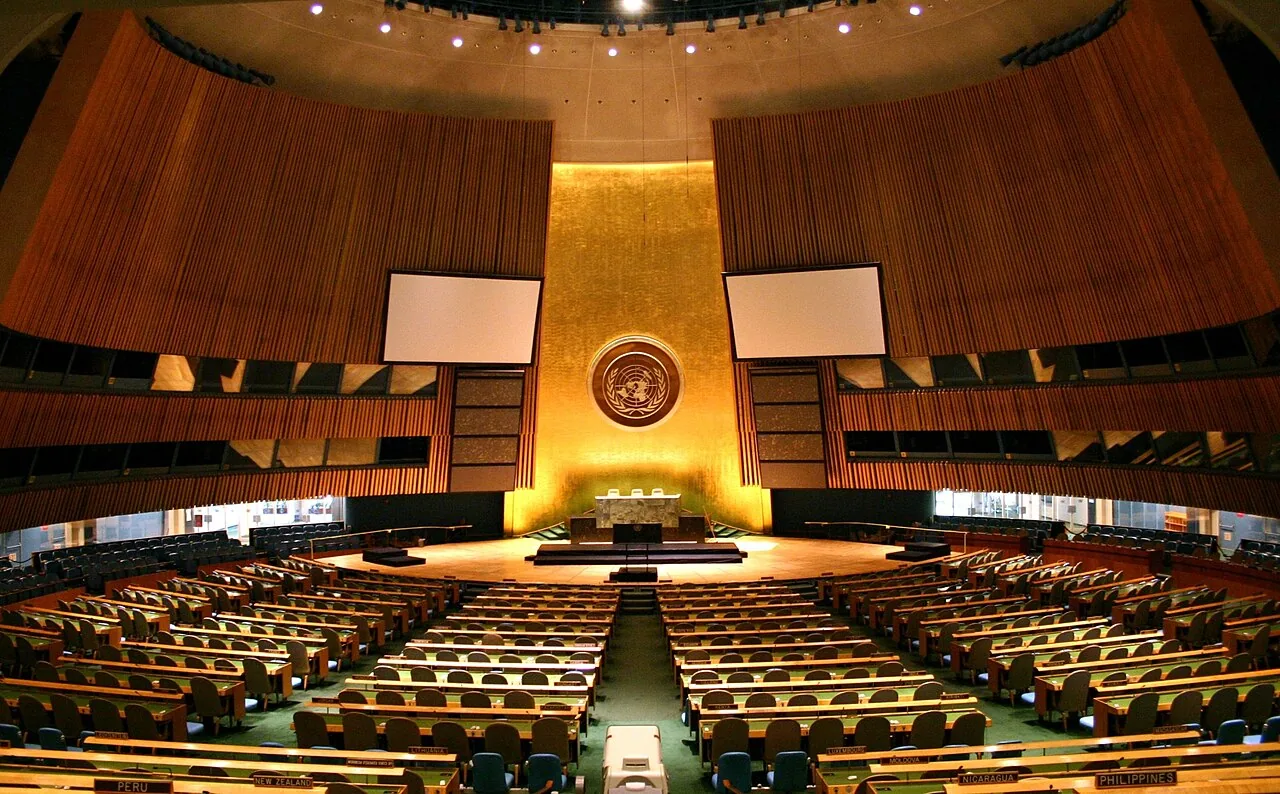
Image: UN General Assembly Hall, in a file photo from 2006. Patrick Gruban / Wikimedia Commons, CC BY-SA 2.0.