

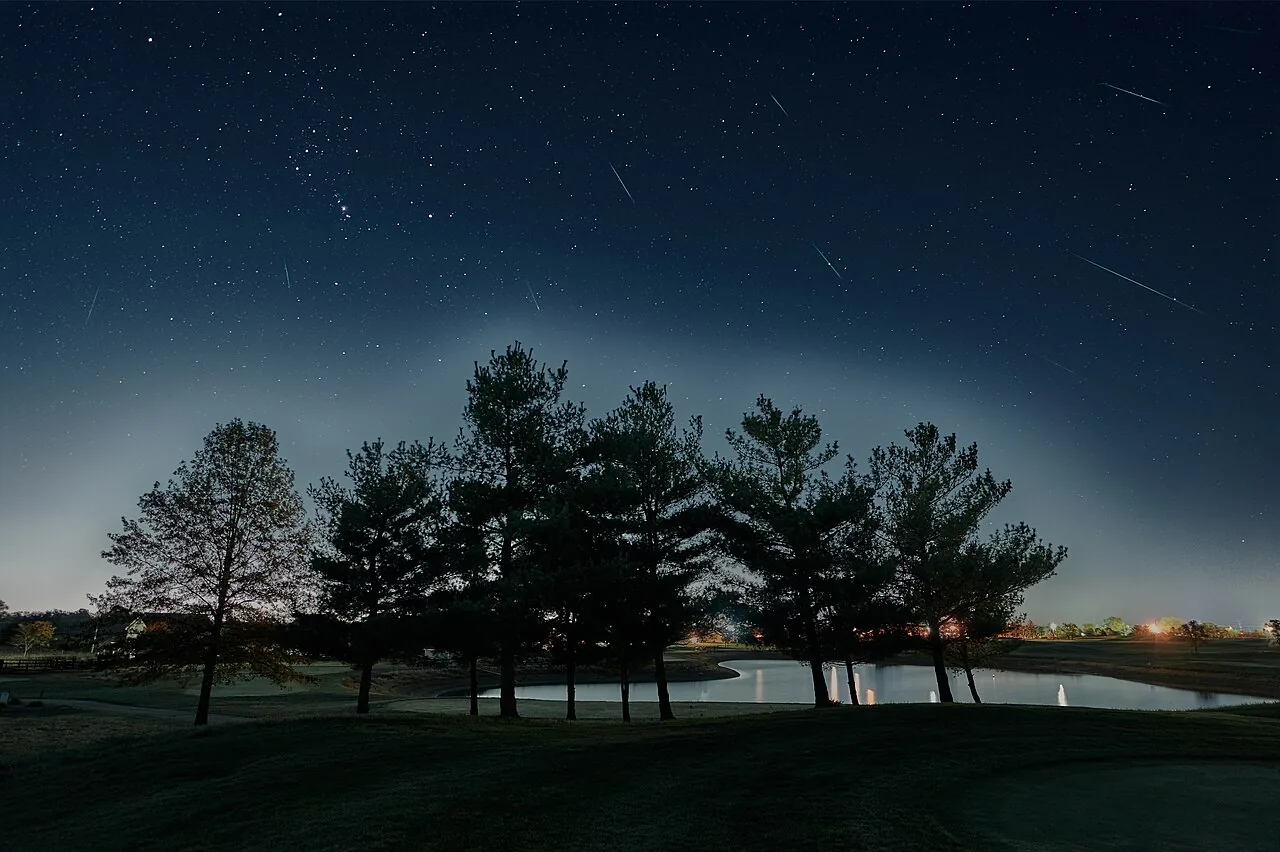
The Orionid meteor shower is expected to peak during the night of 21 to 22 in October, offering a chance to see with the naked eye the flashes produced by dust from Halley’s Comet as it enters Earth’s atmosphere. This year, there will be a major obstacle: the waxing gibbous Moon will brighten the sky and make it harder to spot the fainter meteors.
Under ideal conditions, the shower can produce between 10 and 20 meteors per hour. That figure is no guarantee for every observer: moonlight, light pollution, and clouds all affect what can be seen. So it is best to plan for a patient observing session, not a continuous display of flashes.
How to prepare for viewing
You don’t need a telescope or binoculars. Find a safe, dark spot away from city lights, with a broad, unobstructed view of the sky. Allow a few 20 minutes for your eyes to adjust to the darkness before trying to spot the fainter streaks.
The meteors appear to come from a region near the constellation Orion, beside the star Betelgeuse: this apparent point is called the radiant. However, you don’t need to stare directly at it; looking a little farther from the radiant makes it easier to see the trails.
The Orionids occur every October, when Earth passes through a stream of particles left behind by Halley’s Comet. These fragments reach the atmosphere at about 66 kilometers per second and heat the air around them, creating the brief streaks of light we see from the ground. What we see is this material, not the comet.
Although the peak draws the most attention, it is not the only opportunity: this shower will remain active through 7 in November. If clouds prevent viewing it on the night of peak activity, there will still be other nights to try.
Image: Composite of Orionid meteors from 23 October 2020; file image. Jim Vajda / Wikimedia Commons, CC BY 2.0.