
Raúl Castro is facing a new state case in Florida over the downing of two Brothers to the Rescue planes in 1996. The state attorney’s office announced an arrest warrant Monday, October 19, on a charge of conspiracy to commit murder, adding a state case to the federal indictment filed in May over the attack, in which four people were killed.
The warrant was issued by Ariana Fajardo Orshan, a judge on Florida’s Eleventh Judicial Circuit, and stipulates that no bail be granted. State Attorney General James Uthmeier announced the action, which his office obtained together with the Florida Department of Law Enforcement.
The case seeks to establish Castro’s alleged responsibility within Cuba’s military structure. In 1996, he was minister of the Revolutionary Armed Forces and the country’s first vice president; prosecutors place him in the chain of command that allegedly authorized the downing. The charge also alleges that Cuban agents who had infiltrated Brothers to the Rescue sent information about the flights to Havana to facilitate the operation.
What changes with the state case
Florida’s action does not replace the U.S. Department of Justice case. The federal indictment includes conspiracy to kill U.S. citizens, destruction of aircraft and murder. U.S. Attorney Jason Reding Quiñones backed the new case as a complementary avenue. None of these charges amounts to a finding of guilt.
The incident under investigation occurred on February 24, 1996: Cuban forces shot down two civilian aircraft, while a third managed to escape. Those killed were Carlos Costa, Armando Alejandre Jr., Mario de la Peña and Pablo Morales. Brothers to the Rescue conducted flights to locate and assist Cubans trying to reach the United States by sea.
Castro has denied directly ordering the attack. The Cuban government also rejects the accusations and considers them political. After Florida’s action was announced, President Miguel Díaz-Canel condemned it and questioned its legal basis and practical effects.
The state attorney’s office left open the possibility of filing additional charges. The case therefore remains at the charging stage: the warrant allows it to proceed through a judicial avenue separate from the federal one, but does not determine the former Cuban president’s criminal liability.
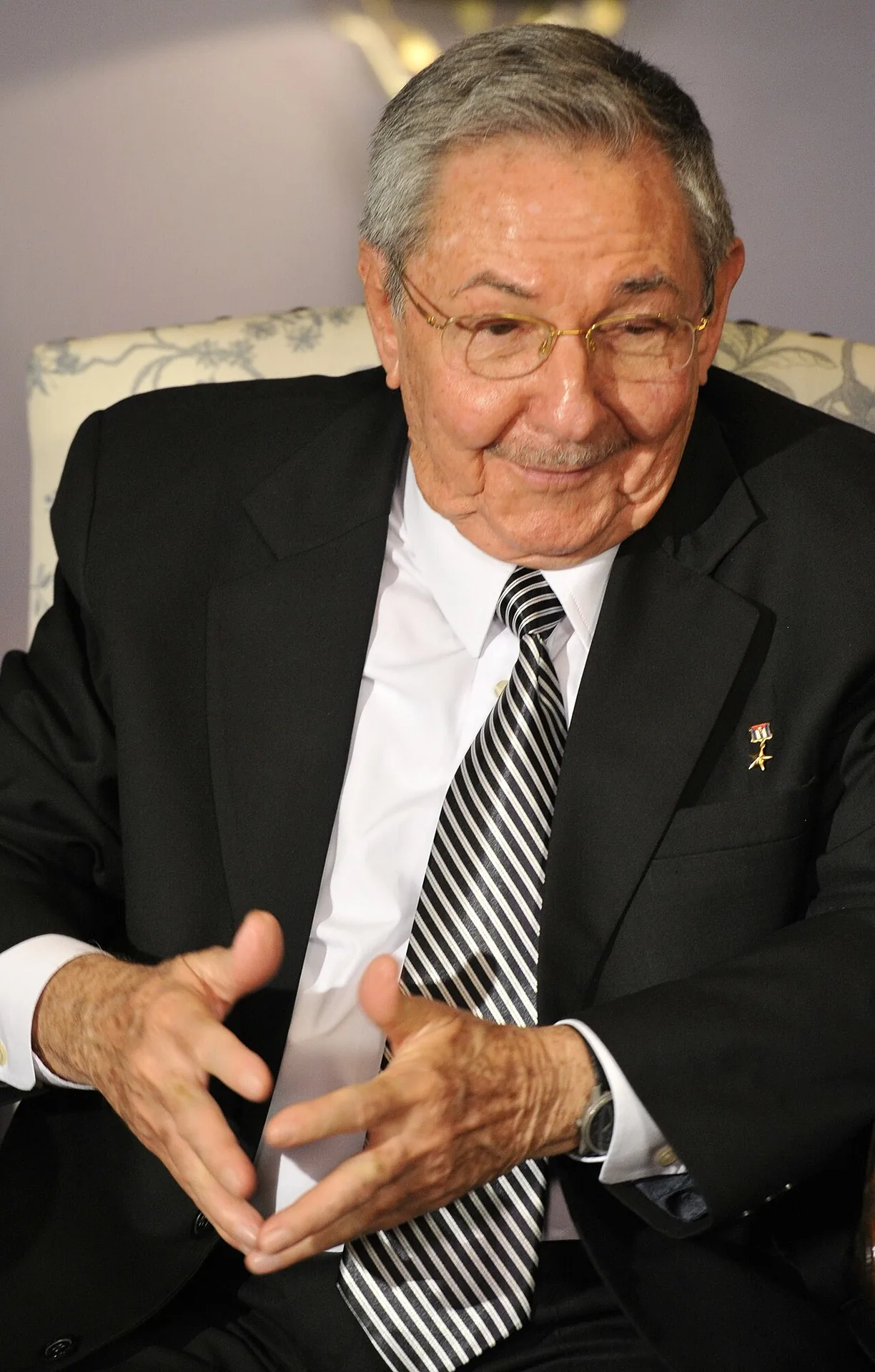
Image: Raúl Castro at a meeting on July 11, 2012. File photo: Government.ru / Wikimedia Commons.