

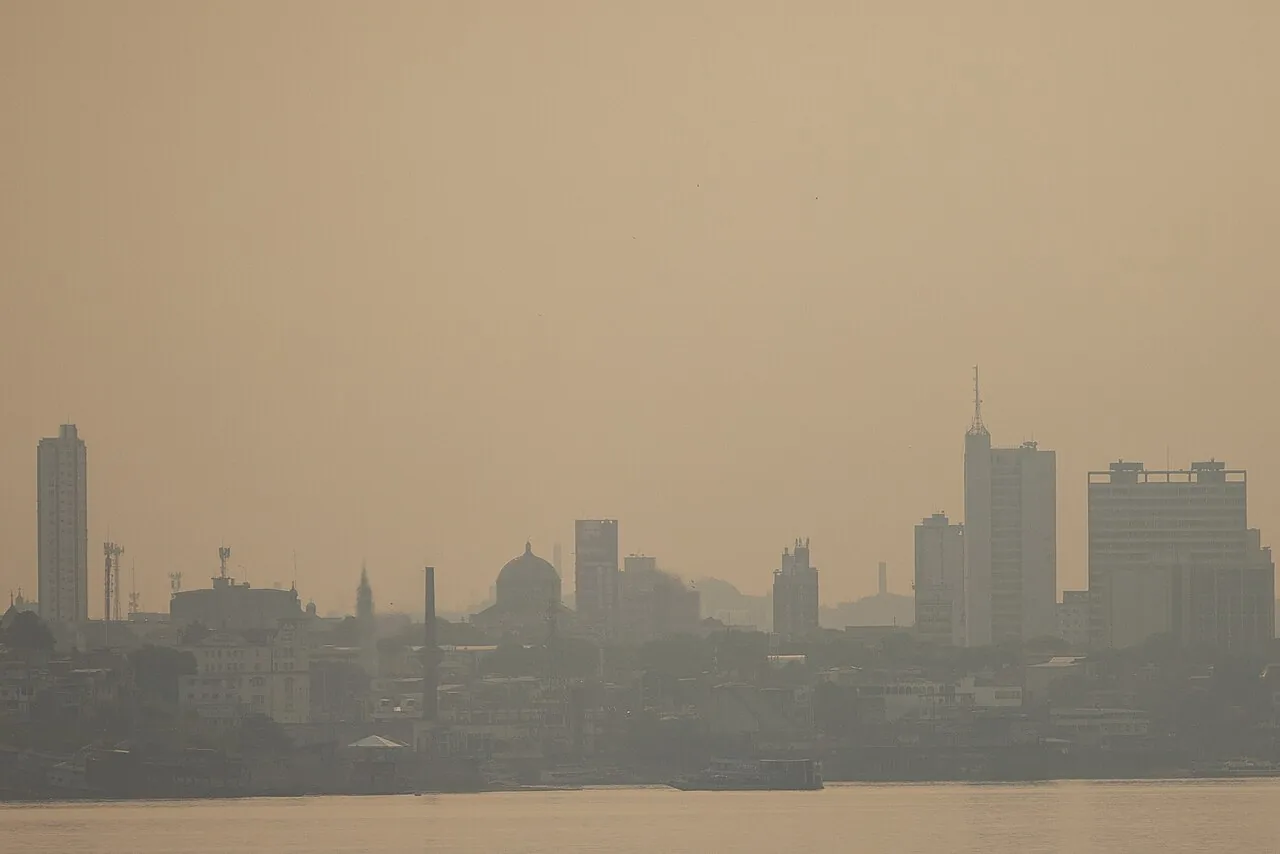
Manaus reached ten consecutive days under smoke on October 17, according to an environmental bulletin from the Amazonas public accounts prosecutor’s office. Understanding the episode requires more than a photograph of the skyline. Counting heat hotspots and measuring airborne particles are different tasks, and improvement in one indicator does not guarantee improvement in the other.
The Amazonian capital is drawing attention because smoke across the region is affecting a major city. The most useful way to read the figures is to ask what each monitoring network measures, where and when, instead of combining unrelated numbers into a single impression of the emergency.
What the measurements show
The bulletin reports elevated fine-particle readings from SELVA, a monitoring network linked to Amazonas State University. These are local, low-cost, non-regulatory sensors. They can help track changing conditions, but individual readings are not an official citywide average or a measurement of exposure over a full 24-hour period.
Separately, the AQUA_M-T reference satellite detected three hotspots in the state on October 16, compared with 188 the previous day. That decline does not prove all fires were extinguished. The count describes detections during particular observations rather than a complete inventory of every active fire.
An emergency that has already prompted reinforcements
Federal support was being expanded before the latest bulletin. Emergency status was recognized in 36 Amazonas municipalities on October 10. The following day, authorities reported aircraft reinforcements and a deployment of 290 federal firefighters to help combat the burning.
Those announcements describe resources mobilized during the episode; they do not establish that the emergency is over. Counts from different monitoring systems should not simply be added together either. Observation times, coverage and detection criteria can differ, creating a risk of counting the same fire more than once.
How to tell whether conditions are improving
A more meaningful sign will be a sustained decline in smoke and particulate readings from comparable observations, alongside reports about fire containment. A single day with fewer detected hotspots is not enough to declare the situation resolved.
The image accompanying this article is clearly labeled as an archive photograph. It shows what a smoke episode in Manaus can look like, but it does not replace current measurements and should not be circulated as a photograph taken in October 2026.