

Special reportKey facts, context and documents
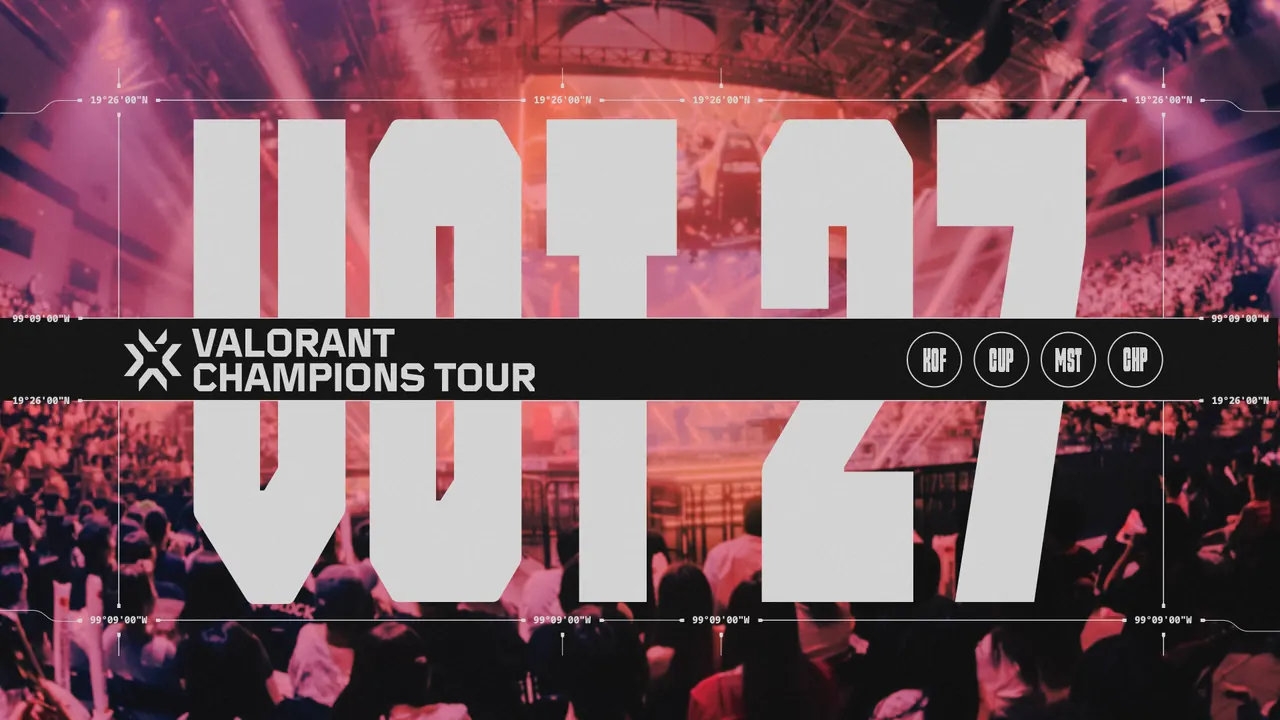
Mexico City is on the VCT 2027 calendar as the host city for the first Americas Cup. Its announced window runs from April 29 to May 23, 2027. That puts the capital on VALORANT’s new tour, but it is too early to choose a day to buy tickets for: the general announcement does not specify a venue, public-attendance dates or match times.
The announcement matters because of what it could bring within the community’s reach. Fans may get to experience a competition they usually follow on a screen. For a Mexican team, it accompanies a restructuring worth examining now: next season starts taking shape before 2026 ends.
Mexico City has a Cup; the attendance guide comes later
Riot’s official Global Tour calendar, published on October 15, places Mexico City in the first Cup window. The full tour spans 15 cities and more than 50 tournaments. This is a season calendar, not a daily programme or a promise that spectators can attend throughout the entire period.
| Detail | What has been announced |
|---|---|
| Competition | VCT Americas · Cup 1 |
| City and window | Mexico City · April 29–May 23, 2027 |
| Venue and admission | No specific venue, prices or ticket sale announced |
| Matches | No match times or pairings published for the Mexican event |
Those are different levels of information. A confirmed city lets fans follow the project; a venue and a public-attendance date let them plan a visit. Mixing them up could mean booking travel for a day reserved for production, practice or competition without an audience. For now, save the window and watch for the Americas-specific details.
The new event does not erase Mexico’s earlier chapter
Calling this Mexico’s first VALORANT event would be incorrect. Monterrey hosted VCT Ascension Americas in 2024, including playoffs and a final with a live audience, in a tournament awarding a place in Americas. That precedent belonged to a different competitive structure.
What is new for 2027 is Mexico City’s place in a Cup within the revamped circuit. The distinction makes the story stronger: it recognises the community that already attended events while explaining what changes competitively. The appeal does not depend on an absolute “first-ever” claim.
It also creates a different conversation with people who do not follow esports yet. A tournament with an approaching decisive stage is easier to explain than months of competition without a clear destination. For evovo, one opportunity is to turn the calendar into stories about teams, decisions and rivalries that make sense before the opening map.
What a Cup is, and why winning there matters
Under Riot’s announced 2027 structure, Cups replace regular-season league play and take place on LAN. There are two per territory, connecting regional competition with Masters and Champions and concluding with a finals weekend. The Mexican Cup occupies that step; it is not VALORANT’s world championship.
For a newcomer, the distinction is practical: following a Cup helps identify who is trying to advance from their territory. Masters and Champions represent another level of the circuit. Fans do not need to memorise every acronym, but understanding the stakes and what each stage awards makes the competition easier to follow.
From a sporting perspective, tournaments can concentrate moments that attract occasional viewers. There is an opposite risk: multiple entry windows can become confusing when coverage only announces event names. Useful reporting will need to explain qualification, elimination and the next opponent, rather than publish isolated scores.
For a Mexican team, preparation starts in October
The LATAM Kickoff qualifiers run on November 5–8 and November 12–15, 2026. Registration opens on October 20. The first window closes on October 31 at 18:00 Mexico time; the second on November 8 at 22:00. Players must be at least 17 and have reached Ascendant within the past six months. This route leads to Kickoff in São Paulo; registering does not secure a Mexico City Cup spot.
Another detail matters: the general qualifier guide ties retained progress to keeping at least three members of the five-player roster. It also points to regional and Vanguard requirements. A group’s important decision is not just who has the best aim, but whether the team can sustain practice, communication and availability through the competition.
A competitive project needs to handle less glamorous tasks early: agree on practice times, assign registration responsibility, check travel documents and establish who can participate. These are organisational tasks, not a promise of results. Completing them reduces the risk of discovering an obstacle after qualification has already been earned.
Funding could make a strong run more sustainable
Riot announced qualification payments for non-partner teams: US$100,000 for reaching Kickoff or a Cup, US$200,000 for Masters and US$400,000 for Champions. These payments are tied to reaching those stages, not to registering, and they are not an individual salary for every player.
The potential consequence is significant. A small team can be competitive while struggling to fund its operation. Knowing that support follows qualification makes continuity, coaching or logistics easier to consider. It does not remove the costs incurred before reaching that objective, or make a competitive season a safe financial investment.
Dividing the headline amount by five to announce what each player “will earn” would therefore be misleading. Contracts, taxes and expenses vary, and the general announcement does not settle them for individual organisations. The economic change is that performance can unlock funding; actual distribution depends on specific rules and agreements.
What the event could mean for Mexican gaming
A Cup’s value need not stop at finals weekend. It could create opportunities in production, broadcasting, commentary, photography and community activities. That is potential to develop, not a quantified economic impact: no announced capacity or evidence here supports promises about jobs or visitor numbers.
For local organisations and creators, some of the most useful work may happen around the competition: explaining the game to new audiences, following teams’ stories and connecting communities that normally meet online. Turning attention into lasting relationships requires useful programming, clear access information and coverage that continues after the event.
For brands, the test will be whether they improve the experience through comfortable spaces, well-run activities or information that helps people attend. Fans have simpler questions: what will they see, what will it cost and how will they get there? A major announcement becomes a good experience when those questions have verifiable answers.
The next developments worth watching
The immediate milestone is LATAM registration, followed by the qualifiers. For a Mexico City visit, the venue, public programme, ticket sale and competing teams still need to be announced. A resale listing or an estimated start time should not be mistaken for the organiser’s official announcement.
Our What to play calendar includes the Mexican Cup and the qualifiers. Competition dates appear without an invented start time. Once fixtures are published, it will be possible to move from a season window to a concrete match-by-match schedule.
Mexico’s opportunity is to make use of both sides of the announcement: a gathering point for fans and a competitive route players can start preparing for. Success will mean more than a photograph of a packed venue. It will also depend on the competitive stories and community that remain after the stage is dismantled.