

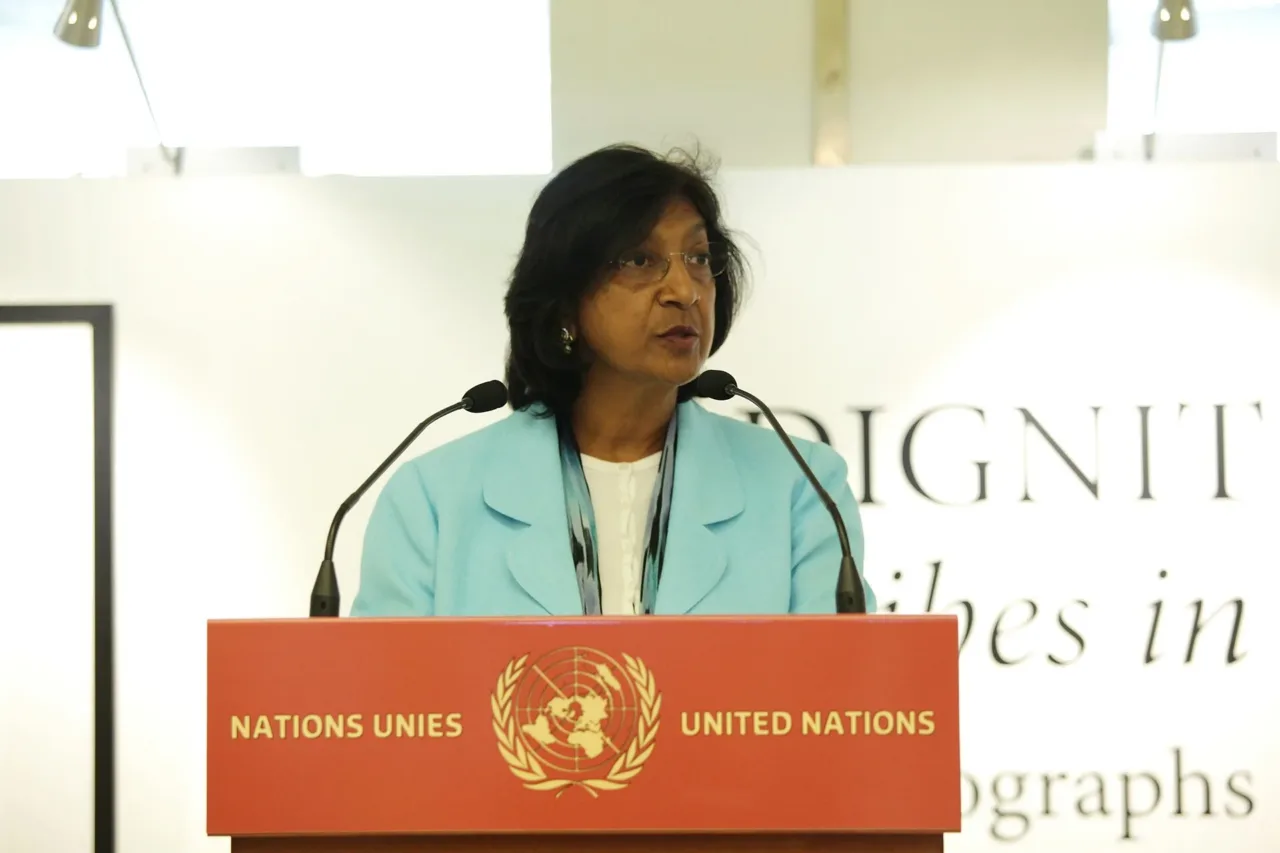
Navi Pillay received the 2026 Nobel Peace Prize on October 9 for her career in international justice. The decision by the Norwegian Nobel Committee puts the spotlight on a South African jurist who has worked at criminal tribunals and in the defense of human rights. It is not a ruling on a specific conflict: it is recognition of her work, with a scope different from that of a judgment.
Her career helps explain a part of the international system that often appears in the news under similar-sounding names. Pillay was a judge at the International Criminal Court and the UN High Commissioner for Human Rights. She currently serves as an ad hoc judge in a case before the International Court of Justice. These are different positions at institutions with different mandates.
From South Africa to the tribunal for Rwanda
The biography published by the International Commission Against the Death Penalty, which Pillay has chaired since 2017, places the start of her law practice in Natal in 1967. During apartheid, she defended activists and political prisoners, including detainees on Robben Island. That period preceded her appointment to the High Court of South Africa in 1995.
That same year, she joined the International Criminal Tribunal for Rwanda, where she served for eight years and was president from 1999 to 2003. The institution established precedents on sexual violence as an act of genocide and on hate propaganda. This helps explain why her career is linked to criminal accountability for atrocities and the legal recognition of victims.
Three institutions worth distinguishing
From 2003 to August 2008, she was a judge at the International Criminal Court, which deals with the criminal responsibility of individuals. She then headed the Office of the United Nations High Commissioner for Human Rights from September 2008 to 2014. That office monitors and promotes rights; it does not operate as a court that issues criminal convictions.
The International Court of Justice, for its part, resolves disputes between states. Pillay is serving as an ad hoc judge in the case brought by The Gambia against Myanmar concerning the Rohingya. Serving as an ad hoc judge means taking part in a specific case; it is not the same as being a permanent member of the court’s regular roster of judges.
What changes with the Nobel and what remains the same
The award brings public recognition to that career, but it does not expand a court’s jurisdiction, change a judgment, or by itself require governments to implement a measure. Confusing the award with a judicial decision would obscure the news: the committee recognizes a body of work; legal proceedings retain their own rules and timelines.
To follow the implications from Mexico, the useful question whenever Pillay is mentioned in the future is what role she is acting in: activist, former official, award recipient, or judge in a specific case. That distinction prevents opinions, documentation work, and binding decisions from being conflated as if they were all the same kind of international intervention.