
Special reportKey facts, context and documents
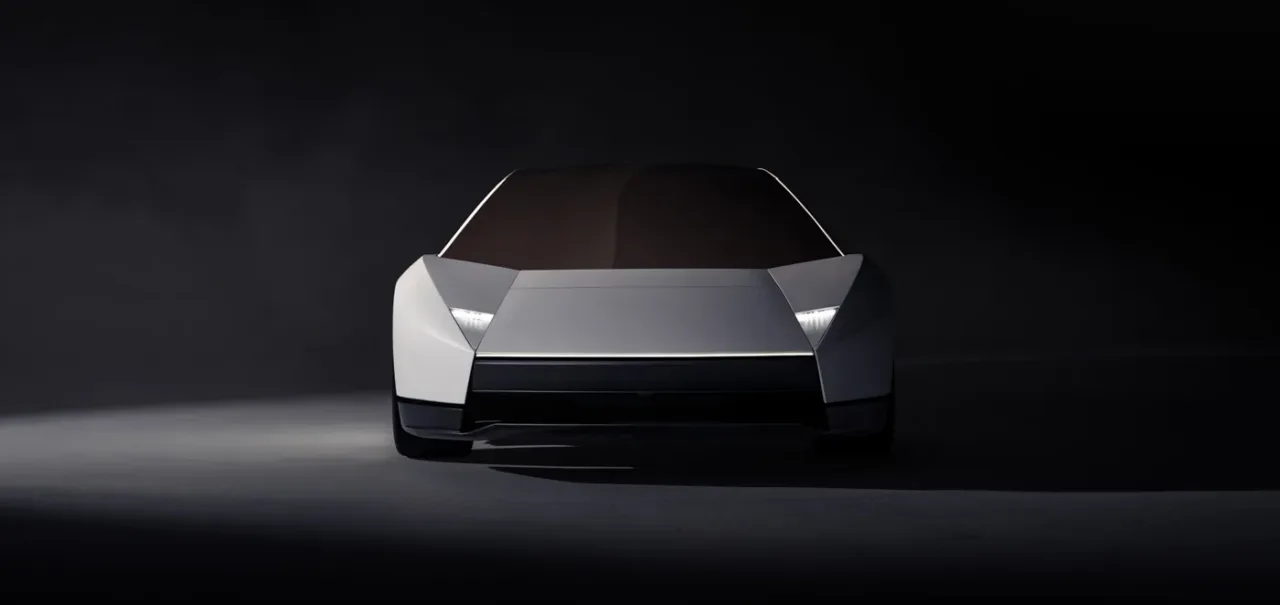
The Tesla Roadster is now more than a promise of speed. During its October 15 presentation in McGregor, Texas, the company showed a car climbing an inverted ramp, leaving its surface and returning to the ground with the help of thrusters. The sequence is in the official video: a vehicle breaks contact with the surface and controls its descent. What has not been demonstrated is that you can buy it and perform those maneuvers on an ordinary public street.
The distinction matters because Roadster no longer describes a single configuration. The road-oriented model and the Rocket variant have different capabilities and restrictions. The spectacle deserves attention for the engineering it shows; understanding it also means examining the intended use, the measurement of its performance and the path to deliveries.
The video: a ramp, a rotation and a landing
Tesla’s broadcast lets viewers examine the full maneuver instead of relying on a viral excerpt. The player starts close to the ramp demonstration. A later sequence takes place over a line of vehicles. Watch the trajectory and landing: the significant part is not simply that the wheels leave the ground, but the thrusters’ intervention during the movement.
Video chapters: ramp and descent · 11:00; second maneuver · 15:30; announced acceleration · 23:07.
One detail changes how the scene should be interpreted: Tesla explained that the demonstration maneuvers were automated, without a human driving. Watching the car perform a stunt therefore does not establish that any buyer could reproduce it manually with the same degree of control. Nor does it establish minutes of flight, operating altitude or airborne range. Those require specific tests.
Two different technologies: staying attached and taking off
Tesla’s explanation combines underbody suction and cold-gas thrusters. They perform different jobs. The first helps maintain contact with a surface; the second can supply thrust when the car is no longer relying exclusively on its wheels. Mixing them up makes the system seem magical and obscures the interesting part: coordinating forces that operate in different ways.
Fan-generated suction already has a visible precedent. McMurtry demonstrated a Spéirling driving upside down in April 2025. Its technical documentation describes fans drawing air from a sealed area beneath the chassis to generate downforce from a standstill. A car can therefore obtain aerodynamic grip without relying solely on the airflow produced by moving forward.
In general terms, a cold-gas thruster releases stored pressurized gas to produce thrust, without the combustion used by a conventional rocket engine. NASA’s propulsion documentation explains this family of systems. Applying that principle to a car raises practical questions: how long it can sustain thrust, how it maintains orientation and what happens as the available supply is consumed.
Assessing the advance will require measuring the transition between both states. Producing substantial grip on a track and controlling a trajectory in the air are different problems. The overall performance depends on sensors, actuators and controls responding consistently. A spectacular demonstration shows a possibility, while repeatability determines how useful it can become.
Performance, Thrust and Rocket offer different capabilities
The updated official product page distinguishes these configurations:
- Performance: two seats, road-oriented, with active aerodynamics and suction.
- Thrust: two seats, a limited release and rear thrusters; Tesla advertises a sub-one-second 0–60 mph time.
- Rocket: one seat, invitation-only access and thrusters arranged around the vehicle. Tesla warns that it is not approved for public roads.
This distinction is more useful than attributing everything shown onstage to every Roadster. When comparing versions, the decisive questions will be which equipment is included, where it can be used and under what conditions. A capability demonstrated by Rocket should not be assumed to come with a reservation for the road-oriented model.
The 0.81-second figure needs context
During the presentation, Tesla reported a 0.81-second 0–60 mph time. That is a manufacturer-announced result, not an independent measurement by evovo. Also, 60 mph is approximately 96.6 km/h: describing it as a 0–100 km/h result would change the test.
Comparing that figure with another sports car would require equivalent conditions: surface, tires, configuration, load and timing method. It also matters whether the clock starts with the first movement or excludes a short initial distance. Without those testing details, ranking cars in a universal league table would claim more certainty than the available evidence supports.
The relevant comparison does not end with a single launch, either. An owner would want to know how often it can be repeated, how long the system takes to become ready again and what wear it causes. Those answers would turn a striking number into useful information. For now, the figure illustrates the project’s ambition, provided its attribution and units remain clear.
What matters to someone following it from Mexico
Musk gave 2028 as the production target during the event. That remains a manufacturer forecast rather than an individual delivery date. The presentation did not provide a final price or a delivery schedule specifically for Mexico. It also gives no basis for treating Rocket’s restriction as an issue that has already been resolved.
Before turning excitement into a purchase decision, practical information is still needed: configurations available in each market, total cost, servicing, maintenance and operating conditions. Converting a historical dollar price into pesos would answer none of those questions. A Mexican launch, if announced, will need its own commercial information.
The important test begins after the stage show
The Roadster has an image that can travel on its own: a sports car breaking free of a ramp and landing again. Its technological value will depend on what happens when those maneuvers become a repeatable product, with known limits and enough documentation to understand it.
Three concrete signals will help assess the next step: independent tests with published methods, final specifications separated by configuration and verifiable deliveries. Until then, the video already offers an interesting subject for discussion: combining grip, thrust and control in an automobile. The challenge now is demonstrating how much of that spectacle can be sustained beyond a presentation.