
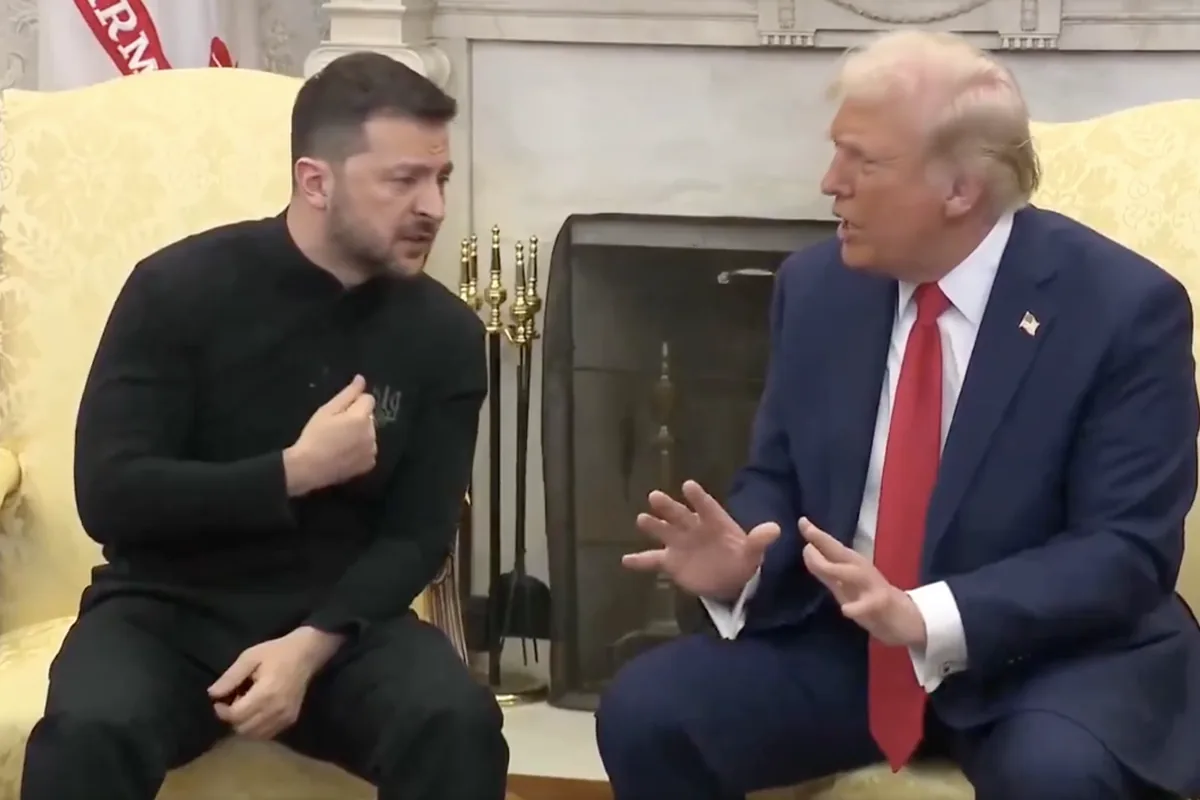
Donald Trump and Volodymyr Zelensky traded criticism on Saturday, October 10, over the United States’ decision to ease restrictions on Russian diesel. The U.S. president questioned Ukrainian attacks on Russian refineries and called for a change of president in Ukraine; Zelensky said Washington’s move sends Moscow a signal that makes it easier to continue the war.
The dispute brings together two related but distinct issues: Russia’s access to fuel markets and Ukraine’s military decisions. Trump’s remarks about another president do not constitute an election announcement or a decision he can impose on Ukraine’s political system himself.
Washington’s Energy Argument
Trump announced Friday that he had spoken with Vladimir Putin and agreed to allow Russia to put greater volumes of diesel on international markets. Coverage by EFE and AFP places the move in the context of tensions over fuel supplies and prices.
Asked about it on Saturday, Trump said the attacks on refineries were worsening that pressure and called for them to stop. That is the justification offered by the U.S. president, not proof that a single measure will resolve international prices or market conditions.
A specific easing of restrictions on one fuel must also be distinguished from a general lifting of all sanctions on Russia. The actual scope depends on the instruments issued and their conditions; the exchange of statements does not automatically extend the authorization to other products or activities.
Ukraine and Europe’s Response
Zelensky criticized the decision and linked it to the resources Russia could obtain to sustain its offensive. The European Union’s top diplomat, Kaja Kallas, voiced a similar objection: easing restrictions on diesel could help finance the war. She also said Europe would not follow suit in easing the pressure.
Kyiv and European representatives did, therefore, respond. The disagreement is not limited to the personal tone between the leaders: it centers on whether improving fuel supplies outweighs the economic effect the authorization could have for Russia.
Diplomacy Remains Open, With No Peace Deal Announced
The clash coincided with diplomatic contacts in Miami among U.S., Ukrainian, and European representatives. Envoy Steve Witkoff described the talks as constructive and linked them to possible ways to de-escalate before winter.
That assessment does not amount to a signed ceasefire. Nor does it confirm that Ukraine has agreed to suspend attacks or that all parties share the conditions advocated by Washington. These are talks and political positions that would still need to be translated, if applicable, into verifiable commitments.
The distinction between an energy announcement, a political accusation, and a diplomatic agreement is key to following the story. This update covers what the actors said and the documented reactions, without turning a leader’s figures or demands into facts accepted by all parties.