
On October 9, 2026, NASA published the final version of its request for proposals for commercial space stations in low Earth orbit. Companies will have until Tuesday, December 8, to submit their plans. The announcement opens a period of industry competition: it does not yet select a provider or confirm that a new station is ready to operate.
The call includes stations and transportation
According to the agency, proposals must cover the design, construction, testing, certification, and operation of commercial destinations for crewed flights. The scope includes both the station and comprehensive transportation services. Therefore, the evaluation is not limited to an orbital infrastructure project: it also considers how to provide the full service NASA seeks to procure for its human spaceflight activities.
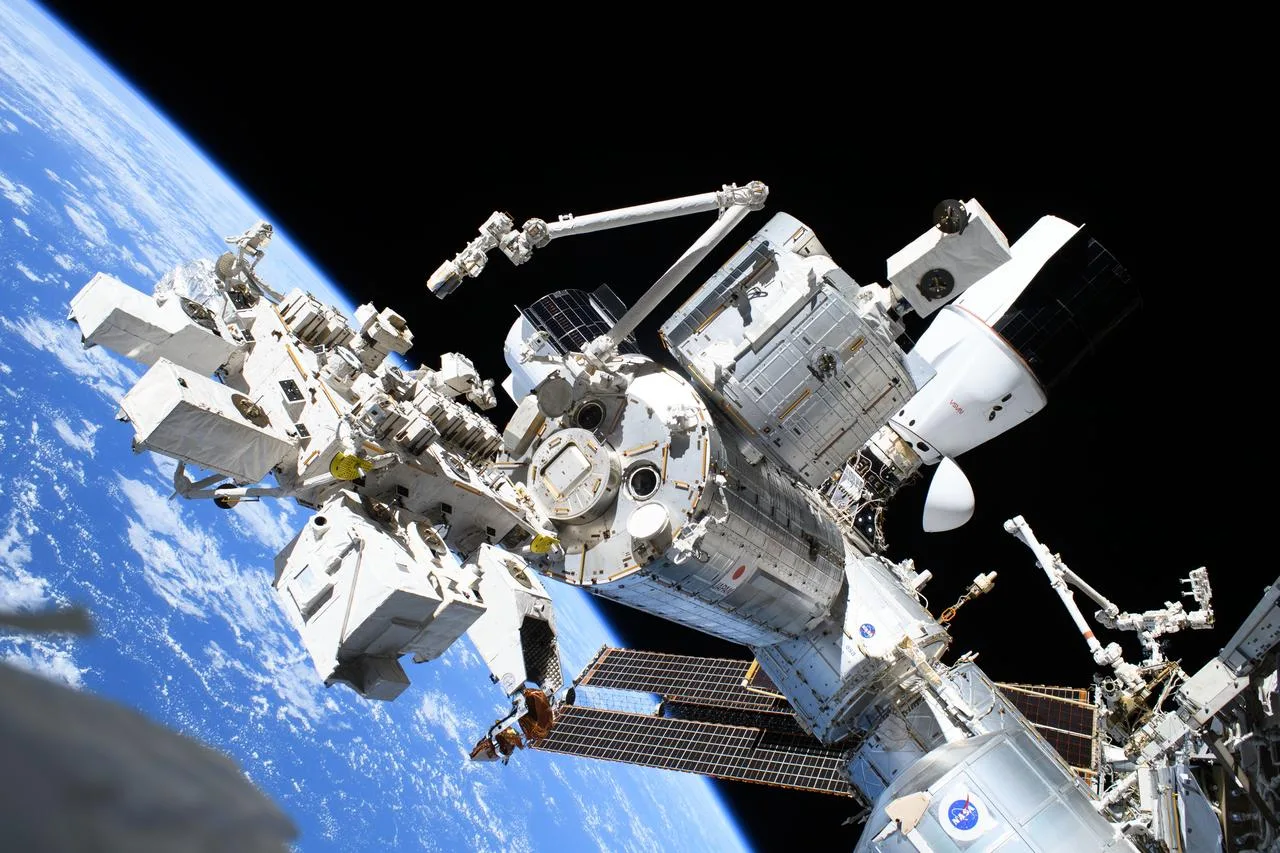
The stated goal is to maintain a sustained U.S. presence in low Earth orbit after the retirement of the International Space Station, known as the ISS. NASA identifies four needs for these future destinations: conducting research, developing technologies, training crews, and preparing missions to the Moon and Mars. Commercial stations are presented as a possible way to maintain these capabilities, not as a solution whose operation has already been proven.
Two selection stages and contracts planned for 2027
NASA expects to award the contracts in spring 2027. Its approach calls for selecting two or more contractors for initial development and, later, holding another competition through a task order. That phase would cover final design, testing, evaluation, certification, and services, and could be handled by one or more contractors. Taking part at the outset does not mean winning the entire subsequent contract.
The agency proposes fixed-price contracts, with multiple awards and under an indefinite-delivery, indefinite-quantity arrangement. That structure is intended to support development, certification, and services to continue research and exploration in low Earth orbit. To track the project, it is worth distinguishing the award planned for 2027 from the start of operations: the announcement does not set an opening date for the future stations.
The commercial challenge goes beyond building
The final request comes after consultation with industry. In March, NASA published two requests for information about orbital destinations and transportation; in July, it released a draft of the solicitation. It then held an industry day and individual meetings to receive feedback on the procurement model. October’s development is the move from those consultations to the final requirements for receiving proposals.
NASA Administrator Jared Isaacman said the agency is seeking credible plans, strong technical execution, and companies willing to invest and attract additional customers. Thus, the goal is not just to build facilities for NASA, but to develop other markets. That economic viability remains a project requirement: the announcement states what the agency expects from companies; it does not establish that those businesses are already sustainable.