
Special reportKey facts, context and documents
An XPeng driving through Paris has revived the question that follows Tesla: who will make a car navigate traffic naturally? A video by FerchoCarros presents the episode as a defeat for Elon Musk’s company. The verifiable news is more interesting than that verdict: XPeng brought NGP to the Paris Motor Show to demonstrate it to European audiences, while Tesla is offering supervised FSD demonstrations at the same event.
This is a real technological challenge; a comparison capable of establishing a winner is still missing. The sources reviewed do not provide a joint assessment using the same route, conditions, software versions and intervention records. A convincing journey reveals capabilities. Safety and consistency require a much larger sample.
Paris puts software in the spotlight
The Mondial de l’Auto runs from October 12 to 18, 2026, at Paris Expo Porte de Versailles. At a show where design, range and power usually dominate, driving demonstrations add another purchasing question: how much work can the car take on without misleading its driver about its limits?
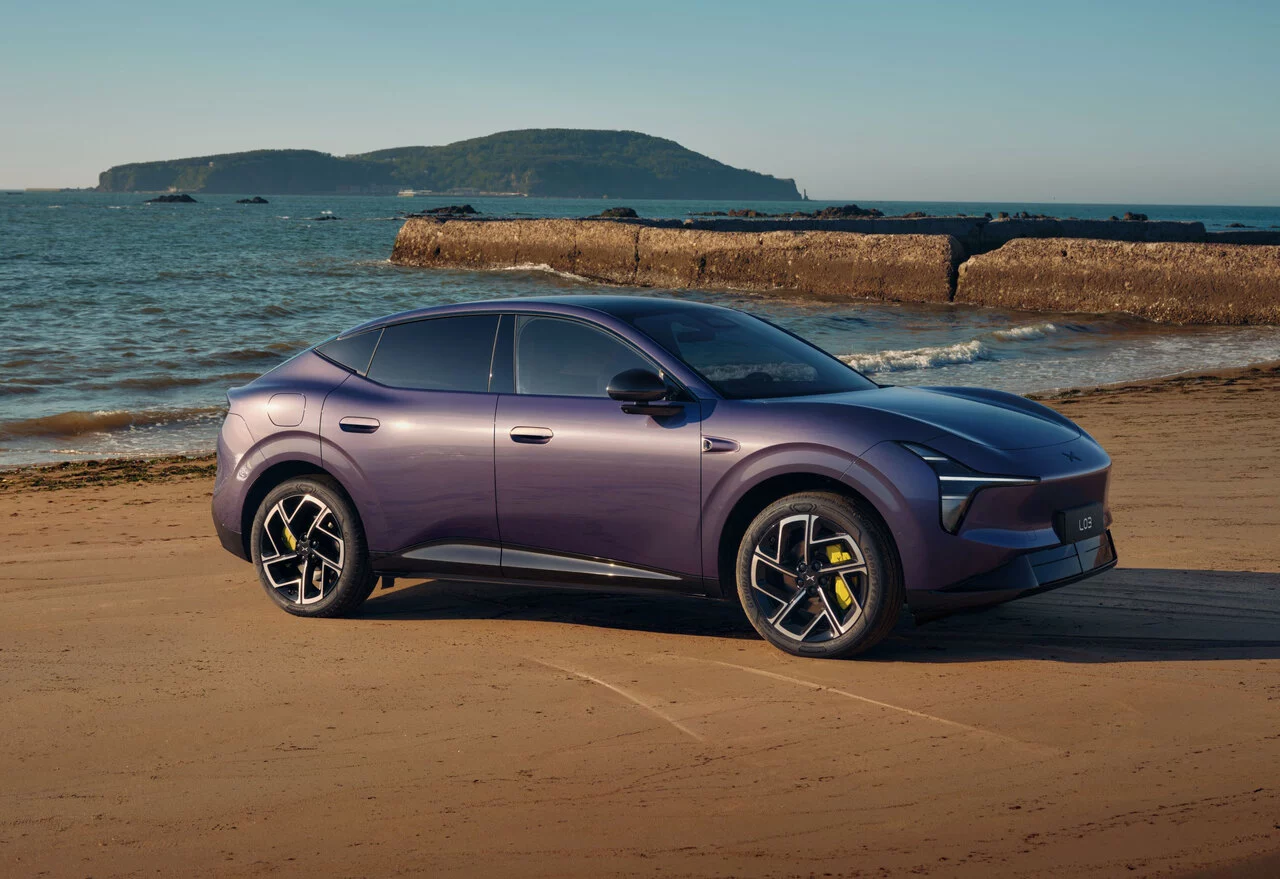
XPeng announced the Autonomous Lab program with its L03, an SUV coupe equipped with NGP, describing it as its first large-scale experience of this kind outside China. It also identified Tesla as the program’s other participant. That information comes from the company’s own announcement; it describes a demonstration without publishing a ranking between manufacturers.
The organizer separately confirms Tesla’s supervised FSD demonstrations. Letting people experience two systems in the same city is valuable, but it does not automatically turn those journeys into an independent comparison.
NGP and FSD: what the car does and what the driver still does
NGP is XPeng’s commercial name for its route-following driving assistance. Its new technological foundation, VLA 2.0, connects perception and actions through a model trained on driving situations. In its 2025 technology presentation, XPeng said it removes an intermediate conversion into language: the idea is to move more directly from interpreting the environment to deciding how to act.
Imagine a partially blocked street. Detecting the stationary vehicle is only the beginning: the system must assess the space, anticipate pedestrians and decide whether to wait. This is an explanatory example, not a maneuver evovo tested in these cars. Handling one scene well does not guarantee handling every variation.
Tesla describes supervised FSD as capable of changing lanes, following road forks and making turns along a route, with active driver supervision. Its own documentation states that the system does not make the vehicle autonomous and that availability depends on factors including hardware, software and region.
The useful distinction is who must monitor the road. On the scale explained by NHTSA, Level 2 assistance can control steering and acceleration or braking while the person remains responsible for supervision. The commercial label “2+” does not add a formal level to that scale. Taking hands off the wheel during a demonstration does not, by itself, mean it is safe to stop paying attention.
The numbers behind the announcement
| Documented fact | What it means |
|---|---|
| 90 cars and 19 brands at the show’s general test-drive center | This is the broader test-drive program, separate from Autonomous Lab. It is not a competition involving 90 autonomous vehicles. |
| G6 and G9: the models that introduced XPeng to Mexico | The local model and its features need checking separately from the L03 demonstrated in Paris. |
| 2027: XPeng’s planned global VLA 2.0 rollout | This is an announced schedule, subject to implementation. It does not establish that every feature is active in Mexico today. |
Data: the show’s test-drive center, XPeng’s Mexican launch and the international VLA 2.0 plan. Forecasts are distinguished from available features.
The camera-versus-lidar debate needs context
The video also revisits the discussion about cameras and lidar. These are approaches to perception; neither describes an entire system’s behavior. Knowing where an obstacle is and choosing a safe trajectory are related but different problems. A useful comparison therefore needs to examine both what a car detects and what it does when its interpretation is uncertain.
The Tesla Model 3 manual describes cameras and neural networks in FSD’s operation and warns about situations that may require intervention. That documentation helps explain the company’s approach; it does not establish that all camera-based solutions are equivalent or allow another car to be evaluated simply by counting its sensors.
The dates matter, too. The widely circulated Mark Rober experiment about fooling a car with driving assistance was published on March 15, 2025. It was not conducted at the 2026 Paris Motor Show. Its conditions and vehicles must be considered within that experiment, without automatically transferring its findings to the versions being demonstrated now.
What a useful comparison would measure
To evaluate this contest, we propose four measures: interventions per kilometer, the reason for each intervention, maneuver comfort and the response when a system reaches its limits. Distance without intervention matters, but so does whether the driver corrected a minor hesitation or prevented a dangerous situation. Combining both events into one number obscures the result.
Routes should be repeated with identified software versions, comparable conditions and complete records. Selected highlights may demonstrate a specific ability; they leave unanswered how often it fails. Comparing demonstration software with an older commercial version without disclosing that difference would also be unfair. These are the report’s proposed comparison criteria, not a test already conducted by evovo.
One useful reference is Euro NCAP’s highway-assistance assessment: it examines assistance capability, driver engagement and safety backup. Its methodology emphasizes that helping with driving and keeping the person involved must work together. Those highway assessments are not an official scoreboard for the urban demonstrations in Paris, either.
What this means for buyers in Mexico
XPeng officially launched its brand in Mexico on March 25, 2026, with the G6 and G9. Its announcement described features grouped under XPILOT ASSIST, including cruise assistance, traffic following and parking. The important distinction is to avoid turning a brand name into a promise for its entire range: buying an XPeng does not establish that it includes the NGP demonstrated in Europe.
The international L03 page itself says features and specifications may vary by market and version. XPeng’s VLA 2.0 expansion announcement also retains the requirement for supervision. A global announcement establishes a development direction; a purchase requires the specific car’s specification sheet and confirmation of what is enabled in the country.
Before paying for advanced assistance, buyers should ask for written confirmation of which features are active, what equipment they require, whether they cost extra and what happens when the system cannot continue. A test drive should reveal the clarity of its alerts and how easily the driver can take over. A promise of a future update does not answer those questions for the seller.
XPeng’s Paris challenge matters because it brings competition into the actual driving experience. For Tesla, it means a rival seeking to be judged on its software as well as its car. The decisive next evidence will be the consistency of features delivered to customers: how they behave, within what limits and under whose responsibility. That is where the scope of this challenge will be measured.