
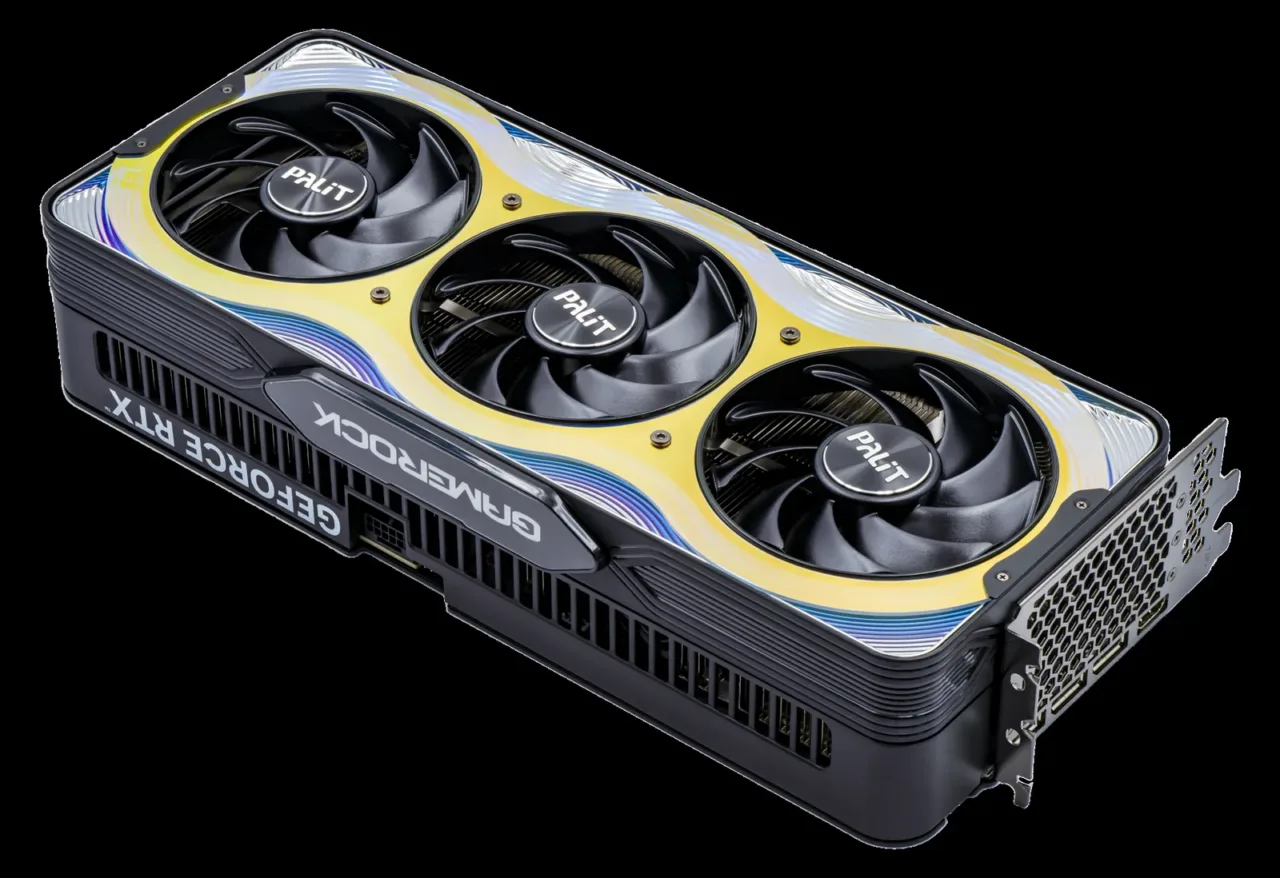
Two leaker posts renewed questions about high-end GeForce cards on October 10. Hongxing2020 claimed the RTX 5090 was reaching the end of production and a 24 GB RTX 5080 was ready. Separately, MEGAsizeGPU said future GB202 chips would go to RTX Pro. These are claims made by those accounts, not a NVIDIA statement.
At the time of this review, the official sources consulted do not provide a retirement announcement for the RTX 5090 or a launch specification for a 24 GB RTX 5080. NVIDIA’s pages retain the known specifications: 32 GB of GDDR7 for the 5090 and 16 GB for the 5080. A product page’s continued existence does not, by itself, prove the status of a manufacturing line.
Ending production does not mean disappearing from stores
Even if a manufacturer changed its chip allocation, chip fabrication, card assembly, distributor inventory and retail availability would remain separate stages. They do not all run out at the same time. A rumor about one stage cannot establish when every card will disappear in every country.
Nor would that automatically mean the end of drivers or warranties. Those conditions require specific support information from the manufacturer of each card. A post using EOL, or end-of-life terminology, cannot replace those notices or establish what happens to a product someone already owns.
What 24 GB would change in an RTX 5080
Moving from 16 to 24 GB would increase capacity by 50%, not double it. That difference can matter when a game, creative scene or local model needs more memory than the card can hold. But memory capacity, memory bandwidth and compute performance are different characteristics.
A hypothetical 5080 with more memory would therefore not automatically become a 5090 or guarantee a matching percentage increase in gaming performance. That would require complete specifications and comparable tests: the same game, settings, resolution and measurement conditions. Neither cited post supplies that body of results.
Reading the rumor without overpaying
For someone shopping for a GPU in Mexico, the useful figure remains the final price of an identifiable unit with a warranty and verifiable availability. These posts establish no new Mexican price. Paying a premium because everything might disappear tomorrow turns an unconfirmed claim into an expensive decision.
The missing signal is something that can be checked: a statement from NVIDIA or a card manufacturer detailing models, memory and timing. Until then, distinguish the existence of a rumor from the existence of a product. Specific posts justify following the story, but they are not enough to declare the RTX 5090 officially retired or a 24 GB 5080 launched.