
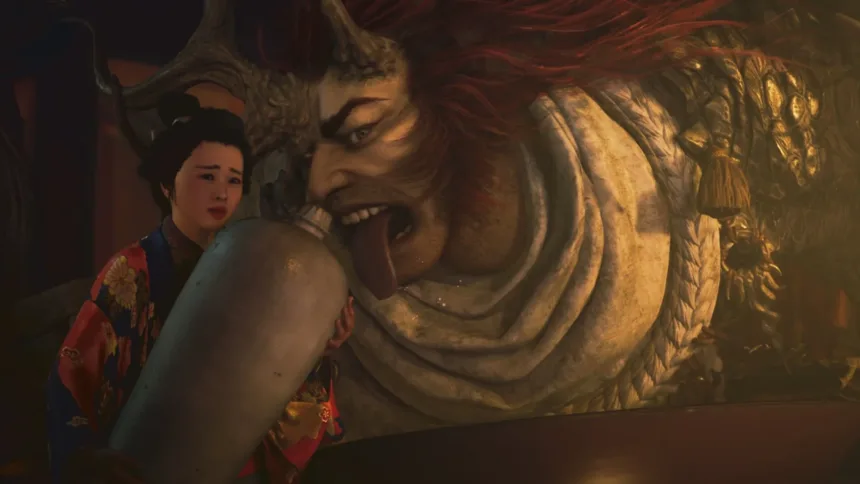
Onimusha: Way of the Sword is now available. Capcom moved up its release date to September 4, 2026, replacing September 25, which had appeared in earlier announcements. The adventure follows a fictional version of Miyamoto Musashi facing the Genma in a supernatural Kyoto, with the Oni Gauntlet at the heart of combat.
Interest in the series’ return goes beyond changing the visual presentation of a familiar franchise. In an interview with Xbox Wire, director Satoru Nihei and producer Akihito Kadowaki explain how they preserved the tension of its classic systems within faster-paced action. Two decisions are especially useful for understanding the game: when to attempt an Issen and when to collect souls.
Issen: get close to danger to strike back
Issen requires acting just before taking a hit. The team describes it as a risk-reward mechanic: success delivers a decisive counterattack; failure leaves the player exposed. It is not the same as holding an active guard and waiting for the game to resolve the exchange.
That logic puts reading the enemy at the center. Recognizing an attack windup, distinguishing a pause, and deciding whether to commit matter more than pressing buttons quickly without watching. The satisfaction the design aims for comes from turning a dangerous moment into an opportunity, an idea that can be assessed through the clarity of the animations and the responsiveness of the controls.
Absorbing souls preserves another kind of tension, but now you can move while doing it. That changes the relationship between collecting resources and remaining vulnerable. Being able to move does not remove the decision: you still have to choose whether to focus on that resource or respond to what is happening around you.
Difficulty and a setting with a purpose of its own
The developers describe Story and Action modes, as well as an action guide for adjusting the experience. Their stated aim is to offer satisfying combat to a broad audience, not to pursue extreme difficulty as the sole objective. Which mode to choose depends on what you want to practice: progressing through the story, learning response windows, or demanding consistent precision.
Kyoto also serves as a source of fiction. The interview explains that the developers incorporated places and legends, such as Rokudo Chinno-ji’s connection to the passage between worlds, adapting them to the Onimusha universe. This blend lets players recognize historical references without treating the campaign as a documentary reconstruction of Musashi’s life.
The demo gives you an item, not campaign continuity
Official Steam announcements describe a demo featuring combat at Kiyomizu-dera and a fight with Sasaki Ganryu; it was later expanded with another area and a boss. Keeping its data lets you obtain the Kubi Akari amulet in the full game. Capcom’s clarification is important: you cannot continue the demo save as if it were the saved beginning of the final campaign.
To see whether the game is a good fit for you, pay attention to how the animation distinguishes an avoidable attack from a counterattack opportunity, and how much room the camera and controls give you to move among several enemies. These are questions about the game’s specific approach. This article explains the systems based on what the people responsible for them have said and keeps that information separate from a review based on firsthand play.