

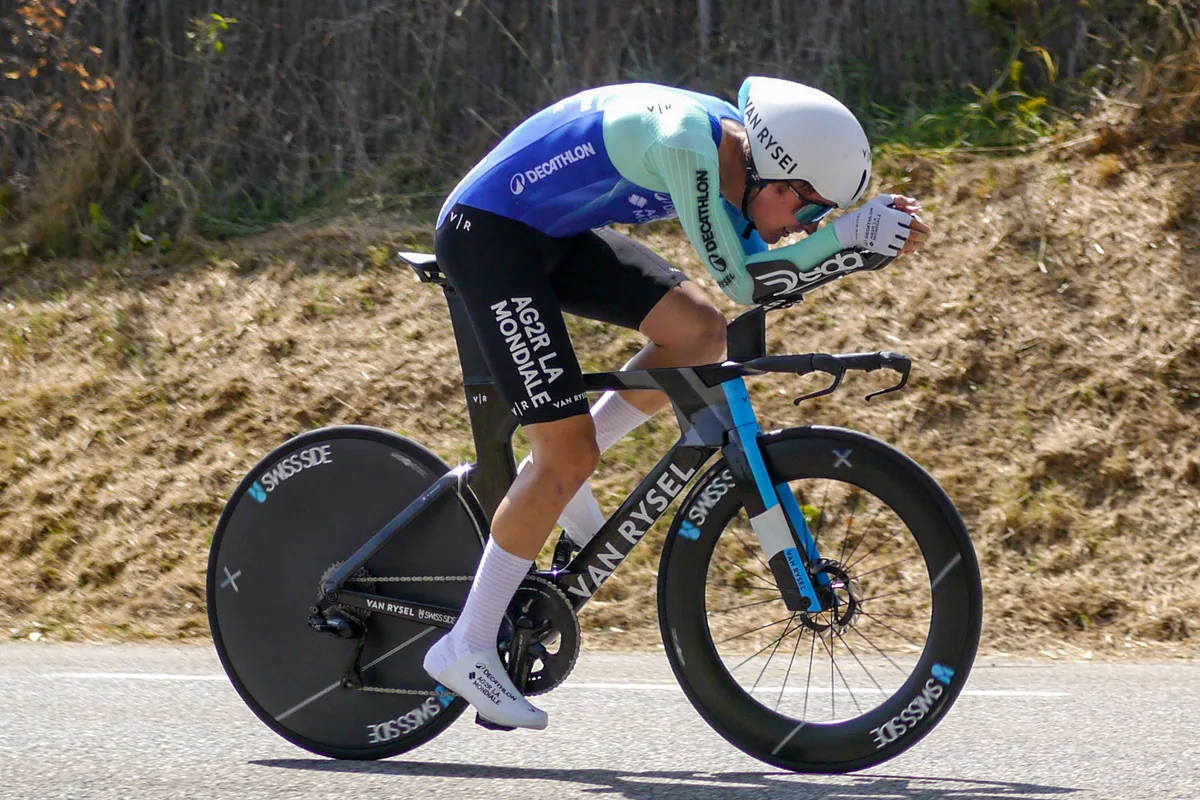
Paul Seixas won the 120th edition of Il Lombardia and, at 20 years and 16 days old, became the youngest winner of the race. The Frenchman completed the 239 kilometers between Bergamo and Como in 5:49:28. Isaac del Toro finished in 28th place, four minutes and 59 seconds behind.
The result put Enric Mas in second, 48 seconds back, and Giulio Ciccone in third, 1:05 back. Remco Evenepoel took fourth place, and Brandon McNulty, Del Toro’s teammate at UAE Team Emirates-XRG, rounded out the top five.
The move that opened up the gap
Seixas’s attack on the climb to Civiglio, about 19 kilometers from the finish, split the Frenchman from the group of contenders. The chase failed to bring him back to the peloton before the final stretch toward Como.
In the organizer’s statement, Seixas explained that he seized an opportunity created by the pace of the race and thanked his team for its work. He did not present it as a victory won solely on the final descent: the attack and his ability to hold the gap were the decisive parts of his race.
Mas finished closest, but crossed the line 48 seconds later. The official time gap puts the finish in perspective without making it sound like a sprint finish: Seixas arrived alone, and the rest of the podium was decided behind him.
How Isaac del Toro’s race ended
According to Claro Sports’s report, Del Toro was part of the group chasing the breakaway riders before the decisive move. The climb and subsequent attacks left him out of the group contesting the top places.
His final result was 28th place, 4:59 behind. He did not abandon the race or finish among the top ten. McNulty, in fifth, was the highest-placed UAE Team Emirates-XRG rider in the published standings.
In a one-day race, that gap is the result of the entire event. There is no stage the next day on which to make up time, as there is in a stage race. That is why the moment a rider loses contact with the leaders has a decisive effect on their chances of reaching the podium.
Why this victory stands on its own
Il Lombardia is one of the five major one-day races known as the Monuments. Winning one is not the same as winning a Grand Tour, but it is one of the most prestigious individual achievements on the one-day racing calendar. For Seixas, it was his first victory at that level.
The age record adds another dimension: the Frenchman prevailed in a long, selective race against riders with experience in the biggest international races. The established facts are his victory and his age; there is no need to turn them into a guarantee of future results.
For Mexican fans following the race, the day leaves a clear takeaway: Del Toro finished the event, but could not stay in contention for the win. The official result and times make it possible to distinguish his performance from the day’s main story, Seixas’s first Monument.