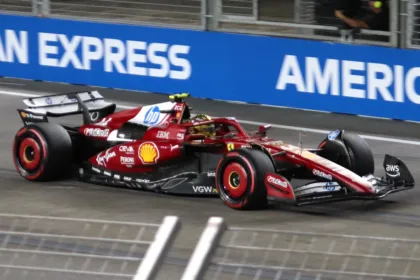


The Singapore Grand Prix, held October 9–11, will bring the Sprint to Marina Bay for the first time. The biggest change comes before the competition: teams will have just one hour of practice to set up the car. On a street circuit where confidence, bumps, and grip affect every corner, arriving with a sound baseline from the simulator takes on special importance.
The track is 4,927 kilometers long, and the Grand Prix is scheduled for 62 laps. Its 19 corners and humid conditions make it a physically demanding event. The sprint race adds another competitive session to the weekend, but does not give engineers the two additional practice sessions they would have in a conventional format.
Traction matters more than top speed
In an analysis published by F1, Alpine racing director Dave Greenwood emphasizes mechanical grip and the ability to handle bumps and curbs. Many corners at Marina Bay require braking, turning at low speed, and accelerating again. A poor exit from a corner carries the time loss into the next straight: reaching a high top speed does not always make up for that disadvantage.
The setup must allow the tire to maintain contact with the track and transfer force to the asphalt. When analyzing the race, it is worth watching how cars exit slow corners and how much the driver corrects while accelerating. A car that is difficult to control can compromise both the fast lap and tire preservation over a long run.
The 2026 cars add another variable with their energy management and active aerodynamics. F1 reports Valtteri Bottas’s expectation that differences in available energy could affect overtaking attempts. This is the driver’s prediction: the actual effect will depend on how the cars perform over the weekend.
Twelve sets to allocate
Pirelli has selected C3, C4, and C5, which will serve as the hard, medium, and soft tires here. The dry-weather allocation for the Sprint format is twelve sets: two hard, four medium, and six soft, compared with thirteen during a conventional weekend. Each session uses up opportunities to run fresh rubber or save it for later.
That changes what a practice time means. A driver on fresh soft tires with little fuel is not necessarily doing the same work as another assessing degradation on a harder compound. For comparisons, it is worth considering the tire used, the length of the run, and consistency, in addition to the best time.
Sunday’s strategy will also depend on how much can be gained from fresher tires and whether there is room to make the most of them. Stopping earlier can provide immediate grip; extending the stint can preserve an advantage for the end. Traffic on the way out of the pits can make either approach pointless.
For viewers in Mexico, the Singapore schedule covers all five sessions. The first useful indication will come on Friday: who manages to get a predictable car in that one hour, and who will have to tackle Sprint qualifying with issues still unresolved.