
Special reportKey facts, context and documents
Club América will turn 110 years old on 12 October 2026. Two events have already been announced for the celebration at Estadio Banorte: the men’s match against Monterrey on the 10 and the women’s match against Pachuca on the 18. There is much more than a birthday between those dates: a history that began with students, changed with television and continues to add chapters on two fields.
América fandom means different things depending on the generation telling the story. For some, it is measured by the finals of the eighties; for others, by Cuauhtémoc Blanco, Moisés Muñoz’s header or André Jardine’s three-peat. At 2026 years, it also includes the names of a women’s team that won championships in Mexico and Concacaf. Looking at those eras together helps explain what the club is celebrating and why its past still weighs on every season.
1916: the team born from two schools
According to América’s archive, it all began with Rafael Garza Gutiérrez, “Récord,” and Germán Núñez Cortina, students at Colegio Mascarones. Their team joined Colón, which had been formed at La Perpetua. On 12 October 1916, they agreed on the name América and kept the cream-and-blue combination used by Récord. They began by gathering players, uniforms and balls to compete.
The first major run came in the twenties, with four consecutive championships between 1924-25 and 1927-28. They belong to the amateur era and should be distinguished from the titles of the professional era: counting them together without explaining the difference changes the meaning of the club’s record.
Television, the Azteca and a change in scale
In July 1959, Emilio Azcárraga Milmo bought the club from Isaac Bessudo. The club’s institutional history places an administrative and economic turning point there. Its connection with Telesistema Mexicano helps explain not only the team but also the entertainment enterprise built around it. The rivalry with Guadalajara and the ability to attract star players would come to occupy a central place in that identity.
The first professional league championship came in the 1965-66 season, decided by the standings. The title record makes it possible to distinguish it from the finals that would later dominate popular memory. The next change was physical: Estadio Azteca, inaugurated on 29 May 1966 with an América–Torino match that ended 2–2. Arlindo dos Santos scored the first goal, as recalled in the account of that opening.
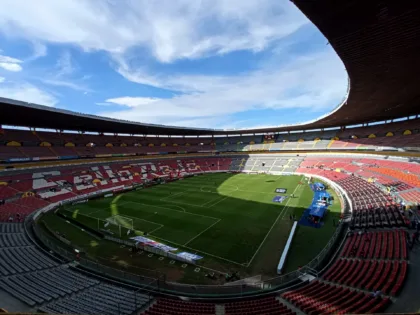
The venue, now announced as Estadio Banorte for the anniversary celebrations, connects those two moments. To read América’s history, it is worth keeping both names: one identifies the current venue; the other is associated with decades of matches and memories that continue to circulate as stories of the Azteca.
The eighties: when winning became an era
Between 1983-84 and 1988-89, América won five league titles. Three came in a row: 1983-84, 1984-85 and Prode 1985. It then added the 1987-88 and 1988-89 titles. The opponents in those finals help explain their emotional weight: Guadalajara, Pumas, Tampico Madero, Pumas again and Cruz Azul. The decade brought victories directly tied to several of the club’s best-known rivalries.
One way to read that sequence is that the winning identity endured through change, rather than being built around a single final. América itself remembers the “Zurdo” López and the 1984-85 championship as a fundamental part of that period. That is why the eighties serve as a demanding benchmark: when a fan base remembers several titles in quick succession, it ends up comparing the team of every Sunday with an entire era.
The names also show that continuity. In a Clásico recap published in 2021, the club named Cristóbal Ortega and Alfredo Tena as the players with the most appearances against Guadalajara, and Luis Roberto Alves “Zague” as its all-time leading scorer in that matchup. Returning to the same showdown for years also builds a legend.
Cuauhtémoc: the idol who also had to wait
Cuauhtémoc Blanco’s career is a reminder that being a star for América and winning a league title with América do not always happen at the same time. His championship with Las Águilas came in the 2005 Clausura, against Tecos. Mario Carrillo’s team won 6–3 in the second leg and closed out the series 7–4; Blanco also scored that afternoon. The TUDN retrospective reconstructs that outcome and the wait that preceded it.
Around him were Guillermo Ochoa, Pável Pardo, Germán Villa, Claudio López and Kléber, among others. Remembering those teammates restores the title’s collective dimension. The talent of a star can give a generation a face, but a season depends on a squad, a style of play and different answers to different matches. At 2005 years, celebrating Blanco was also a celebration of that team.
2013: five minutes that changed a final
On 26 May 2013, América reached the end of the second leg against Cruz Azul with ten players and trailing by two goals on aggregate. Aquivaldo Mosquera brought the team closer, and in stoppage time Moisés Muñoz left his goal to head a corner kick. His header, deflected by Alejandro Castro, took the series to 2–2. Extra time followed, and then 4–2 for América in the penalty shootout.
The match report published the next day by La Jornada makes it possible to reconstruct what highlights often compress: Jesús Molina’s early sending-off, Cruz Azul’s chances to put the match away and the late turnaround. That context restores the difficulty of the comeback. The image of the goalkeeper attacking works because everything that came before suggested the championship was slipping away.
It also explains why a single play can become the gateway to a team. Some fans learned about that night before they knew the full list of championships: soccer is also passed on through scenes that someone tells again.
The centennial brought a cup and a defeat
2016’s hundredth anniversary offers a useful comparison with this anniversary. In April, América beat Tigres 4–1 on aggregate and claimed its seventh Concacaf championship, its second in a row. The confederation’s report documents a win that also secured a place in that year’s Club World Cup.
In December, against the same opponent, the outcome was different: Tigres won the 2016 Apertura final on penalties, after an 2–2 aggregate score. The Concacaf match report records that defeat. Both finals are part of the same centennial. Remembering them together helps put any celebration in perspective: an important date can give a match added meaning, but it never decides the score.
The 2023–2024 three-peat changed the recent benchmark
Under André Jardine, América won the 2023 Apertura against Tigres, the 2024 Clausura against Cruz Azul and the 2024 Apertura against Monterrey. It was the first three-peat since the introduction of short tournaments. The official account of that period identifies those titles as the club’s 14, 15 and 16 league championships.
The difference from a single successful Liguilla lies in repetition: the team had to qualify again, face new knockout rounds and settle three finals against different opponents. That continuity gave a recent generation its own benchmark of dominance, without relying solely on stories from the eighties.
It also raised the bar for what came next. When three consecutive championships become the immediate memory, a subsequent campaign is judged against a historic exception. That tension between what extraordinarily happened and what is expected every half-season is part of América’s present.
The women’s team is already writing a central part of these 110 years
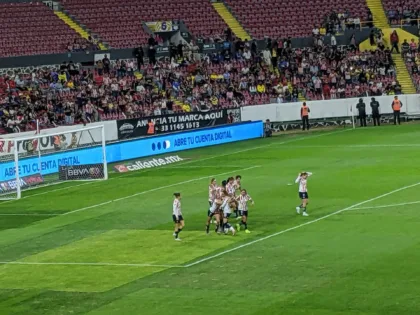
On 17 May 2026, América Femenil won its third league title, beating Rayadas 3–0 in the second leg of the Clausura final. Irene Guerrero, Geyse Ferreira and Scarlett Camberos scored the goals. The club report also notes that the team had finished first in the regular season.
Six days later came another chapter: the 5–3 over Washington Spirit in the Concacaf W Champions Cup final, played in Pachuca. The confederation confirmed that América became the first Mexican club to win the tournament. That cup secured it a place in FIFA’s 2027 Women’s Champions Cup and put the team on the path to the 2028 Women’s Club World Cup.
These achievements have their own protagonists and journeys. Including them changes the way the anniversary is told: it recognizes that the current history of the crest is also being built by the players, their opponents and their decisive nights. The women’s match on 18 October will close the celebration program announced by the club.
How 2026’s anniversary is being celebrated
The official 110 anniversary schedule sets the start of the celebration for Saturday, 10 October, América–Monterrey, and its conclusion for Sunday, 18 October, América Femenil–Pachuca, both at Estadio Banorte. The birthday falls on Monday 12. The club’s website links to ticket sales for each match; availability, entry details and conditions should be checked there before planning a visit.
The commemoration also made its way onto the uniform. In July, América and adidas unveiled the 2026–2027 home jersey with references to the eighties and nineties: yellow as the base color, the crest rendered in a large format, and blue and red details. It is another way to connect generations who did not see the same players but recognize the same colors.
To follow the team after the celebration, visit our Liga BBVA MX and Liga Femenil BBVAhubs for schedules, results and news. At 110 years, the next page is still being written one match at a time.
Sources: Club América history, announcements and schedule; Concacaf match reports; La Jornada archive; historical records from TUDN and La Razón, linked alongside the corresponding information. Consulted: 10 October 2026. Commemorative image provided to evovo for this special feature.