

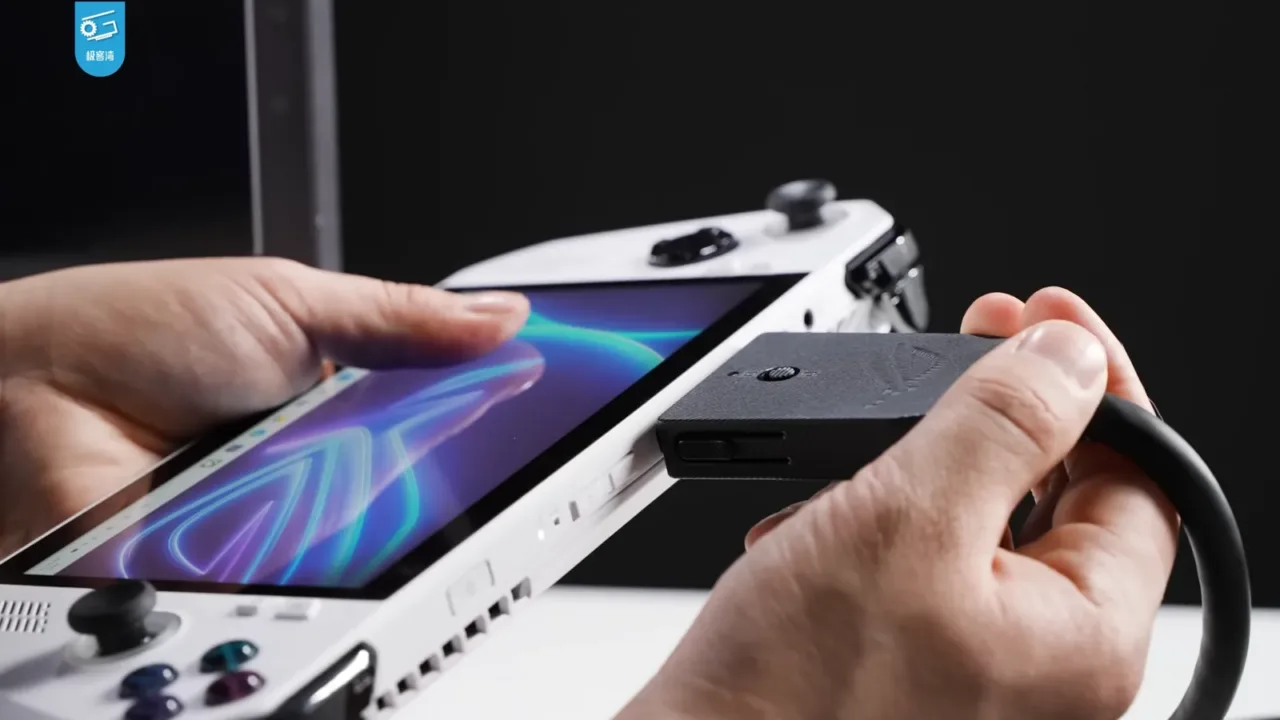
AMD aims to bring FSR 4 to more devices with integrated graphics before the end of 2026. Jack Huynh, who leads its computing and graphics group, told reporters in Seoul on October 7 that the expansion covers APUs, gaming laptops and handheld devices. He also described a lighter model developed for the constraints of these platforms.
The statement, reported firsthand by The Elec, describes two paths: working with existing APUs and preparing new product families. That is different from promising the same feature for every Ryzen handheld. The remarks do not include a compatibility matrix or a schedule for individual models.
AMD now calls the technology previously known as FSR 4 FSR Upscaling. That reconstruction feature belongs to a broader family: support for one FSR version does not mean a device supports every feature.
Why a desktop feature cannot simply be copied across
An APU combines CPU and graphics on one chip. In a handheld, those blocks share a power budget and cooling system that are much tighter than those in a computer with a separate graphics card. The integrated GPU also uses system memory. Improving the image carries a processing cost that must fit within these constraints.
Upscaling reconstructs an output image from a lower internal resolution. It can reduce the work required to draw the scene, but the algorithm itself also consumes resources. A model designed for a desktop GPU is therefore not guaranteed to deliver the same benefit in a handheld. The announced optimization addresses that difference.
What it means for existing handheld owners
The announcement opens a possibility; it is not an update available to everyone today. To establish support for your device, you will need its exact chip, the manufacturer’s recommended driver and compatible games. Devices sold under similar branding can use different integrated GPUs and follow different software schedules.
Upscaling should not be confused with frame generation, either. One reconstructs an image; the other inserts frames between those rendered by the game. A higher counter alone does not describe control responsiveness. Evaluating the result requires attention to stability, motion clarity and latency, as well as frames per second.
The testing still needed
Measurements must use the same game, output resolution, power limit and software version. Changing all those variables at once makes it impossible to isolate FSR 4’s effect. Longer battery life is not guaranteed, either: potential savings depend on how additional performance is used and on the chosen frame-rate limit.
In Mexico, where these devices often represent a substantial purchase, it makes sense to judge the experience available today. AMD’s planned expansion is a meaningful development for the end of the year, but it should not become a seller’s promise about a model that has yet to appear on an official support list.

_26.png)