
On October 7, Microsoft announced new advances in gaming for Windows on Arm alongside RTX Spark. It cited titles such as Fortnite and Alan Wake 2 in the available catalog and placed Call of Duty in 2027. That difference in timing matters: the laptops’ launch in October doesn’t mean every announced franchise will be ready on the same day.
The situation raises a common question when switching architectures: if a computer has a powerful GPU and runs Windows, why might a game need additional work? The answer lies in the set of components it uses, from its CPU instructions to drivers, protections, and dependencies.
Prism translates applications, not every system component
Microsoft’s documentation explains that Windows 11 on Arm can emulate x86 and x64 applications. Prism translates instruction blocks and reuses already-translated code through caches. This allows many programs designed for another architecture to run without a native Arm version.
The relevant limitation is drivers: components that run in kernel mode need to be compiled for Arm64. A game can open its menu and still encounter problems with a feature that depends on an unsupported driver or protection. Campaign, multiplayer, and peripheral compatibility don’t always involve the same checks.
That’s why confirmation needs to apply to the specific title and the features being used. Someone who only plays a campaign may have a different test path from someone who needs competitive matchmaking, anticheat, voice chat, and a steering wheel with its own software. Graphics performance comes into play after those components allow the experience to run properly.
What shipping prepared shaders offers
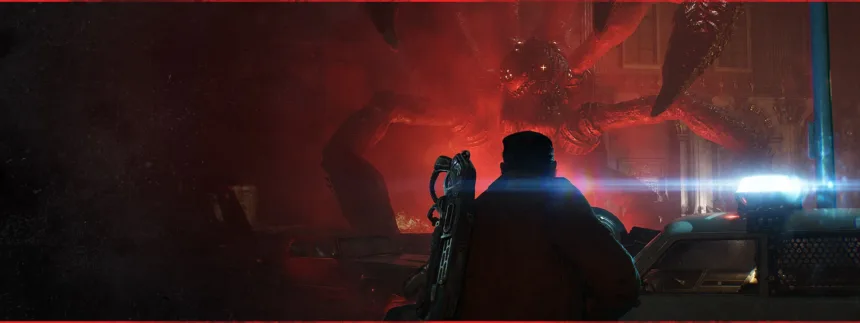
Microsoft points to Gears of War: E-Day as the first game with expanded support for Advanced Shader Delivery. The goal is to reduce the initial compilation wait and stutters associated with that work. Shaders are small programs used to render a scene; preparing them at the wrong time can interrupt the steady delivery of frames.
This issue helps distinguish average FPS from smoothness. A sequence can produce many frames most of the time and still experience pauses when a new effect or setting appears. Reducing those pauses improves consistency even if the average doesn’t change dramatically. The scope should be checked for each compatible game and its actual settings.
How to read a performance demo
Output resolution, internal resolution, preset, frame generation, and the computer’s power consumption should accompany any figure. “60 FPS on Ultra” leaves questions unanswered if it doesn’t explain those parameters. Comparing only that number between a laptop and a desktop PC can mean comparing very different workloads.
With RTX Spark, there are two advances to watch separately: growth in the fully functional game catalog and whether compatible titles maintain a good experience during long sessions. The announcement of Call of Duty for 2027 sets a future expectation. When choosing a computer now, the useful reference is the status of the games you’ll actually use today.