
The U.S. Space Weather Prediction Center is monitoring for a moderate geomagnetic storm, level G2, on 11 October. The 9 October advisory links the forecast to coronal mass ejections recorded on 7 and 8. The news is a forecast of conditions for Sunday, not confirmation that this level has already been reached at Earth.
Coronal mass ejections are large expulsions of plasma and magnetic field from the Sun. When their path and orientation favor interaction with Earth’s surroundings, they can disturb our planet’s magnetic field. The speed of each ejection and the way they interact during the journey make it difficult to pinpoint an exact arrival time.
Why it matters that there are two ejections
The official forecast anticipates that the faster material will catch up with the material that left earlier. This interaction can change the disturbance that eventually reaches Earth. It is one reason to check the center’s updates and distinguish advance monitoring from an alert based on observations made closer to the planet.
G2 is the second level on a five-level scale, from G1 to G5. The label describes geomagnetic intensity; it is not a radiation scale indicating immediate danger to people on the ground. A geomagnetic storm should also not be confused with a solar flare: they are related phenomena, but their arrival times and effects are not the same.
Auroras: a possibility, not a promise for Mexico
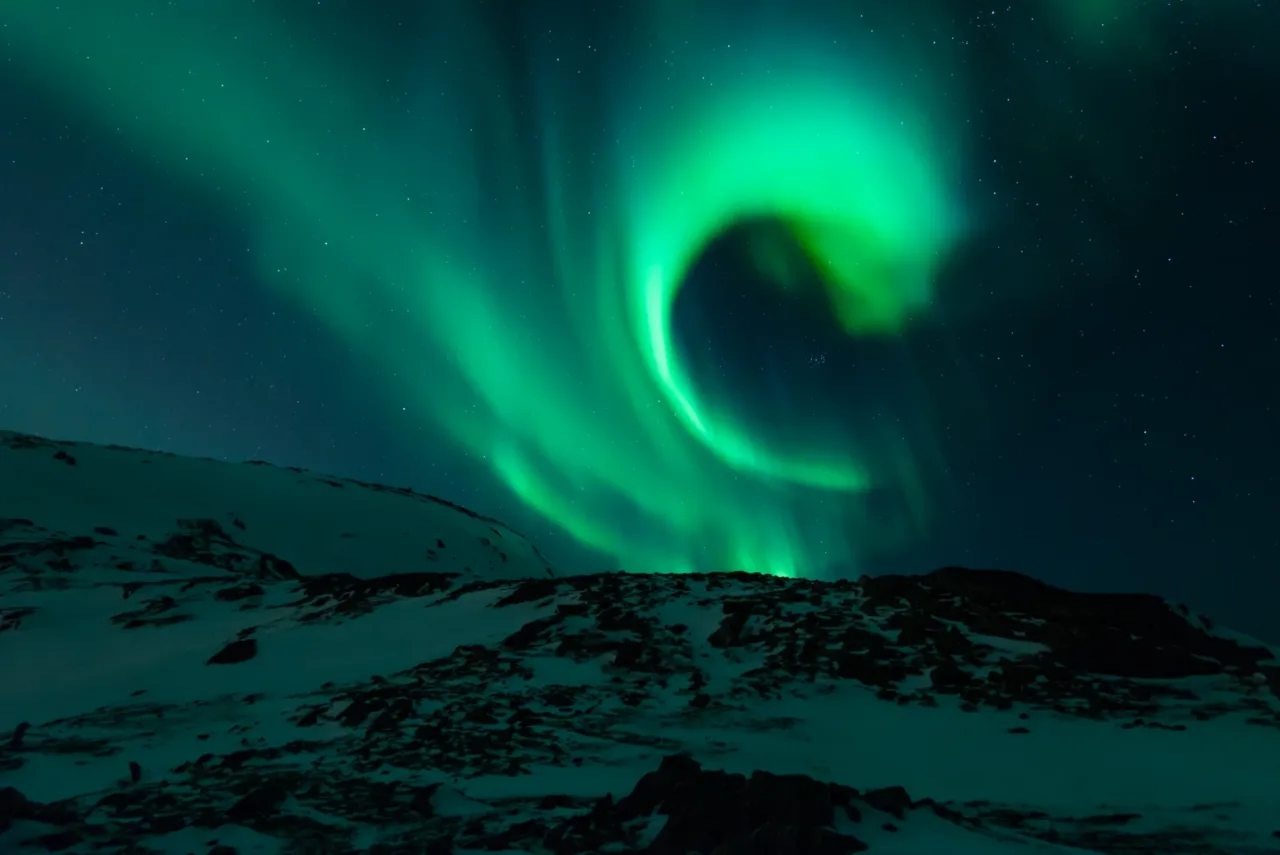
When geomagnetic activity increases, auroras can appear farther from the poles. Their visibility also depends on latitude, darkness, clouds, and the event’s actual intensity. A photograph of a previous storm cannot guarantee that the same display will happen again this weekend.
The G2 advisory alone does not confirm that auroras will be visible from Mexico City or anywhere else in the country. To see them, the event’s development would have to coincide with local conditions. Beware of viral maps without a time, archival images presented as current, or headlines that treat a nationwide sighting as certain.
Where to follow changing conditions
The reference is NOAA’s Space Weather Prediction Center. Its advisory has a cutoff time and a validity date; if the forecast changes, a later update should replace it. In technical systems, these disturbances can affect certain satellite operations, communications, and power grids, but moderate monitoring does not amount to an announcement of a widespread blackout.
The available information makes it possible to prepare to follow Sunday’s conditions, 11, without turning uncertainty into alarm. The image accompanying this article is an archival image showing an aurora; it does not document conditions in October 2026.